How to Choose the Right Custom Suit Fabric for Your Shape
A curated guide to choosing the ideal custom suit fabric—balancing weight, drape, and silhouette for every occasion.
The moment you step into a fitting salon, surrounded by stacks of curated fabric swatches, you quickly realize a quiet truth: a suit is only as commanding as the cloth it is cut from.
Off-the-rack garments often force a compromise. You find a blazer that fits across the shoulders, only to discover the fabric pulls stiffly across the waist or collapses into limp wrinkles after a single board meeting. When you commission a made-to-measure suit, however, you hold the power to dictate not just the cut, but the exact tactile presence of your garment.
Choosing the right custom suit fabric is an art of equilibrium. It requires aligning the weight and weave with your unique proportions, the climate of your life, and the occasions where you need to feel infallible. Here is your definitive roadmap to navigating fabrics, silhouettes, and dress codes with effortless poise.
The Fabric Foundation: Weight, Weave, and Drape
Before falling in love with a subtle glen plaid or an understated midnight navy, you must understand the mechanical soul of tailoring: fabric weight and drape.
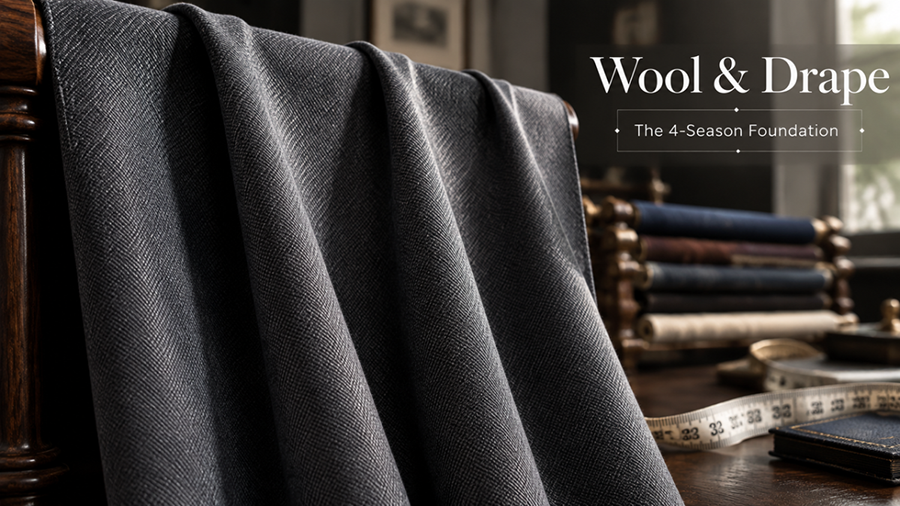
In the bespoke lexicon, fabric weight is measured in grams per linear meter (g/m²) or ounces. This single metric governs how a garment behaves under gravity:
- Lightweight (180–230 g/m²): Airy and breathable, tailored primarily for midsummer events or humid climates. These fabrics feel ethereal but lack natural crease resistance.
- Midweight (240–270 g/m²): The revered golden standard. High-twist worsted wool in this bracket possesses sufficient structural density to hang cleanly while remaining remarkably comfortable across all four seasons.
- Heavyweight (300 g/m² and above): Flannels, tweeds, and substantial wools that insulate against winter chills and sculpt crisp, sculptural contours.
Why does this matter for women’s tailoring? It comes down to drape—the fluid way cloth falls, ripples, and settles along the body. A fabric with balanced drape does not merely cling to your curves; it skims over them, smoothing contours and holding clean architectural lines from morning coffee to an evening gala.
A common pitfall is chasing exorbitant thread counts like Super 180s or 200s. While exquisitely soft, ultra-high-count wools are delicate and prone to creasing. For a workhorse suit that maintains its composure through back-to-back flights and intense presentations, a resilient Super 110s to 130s worsted wool provides the ideal blend of durability and understated luster.
Tailoring to Your Silhouette: How Fabric Shapes You
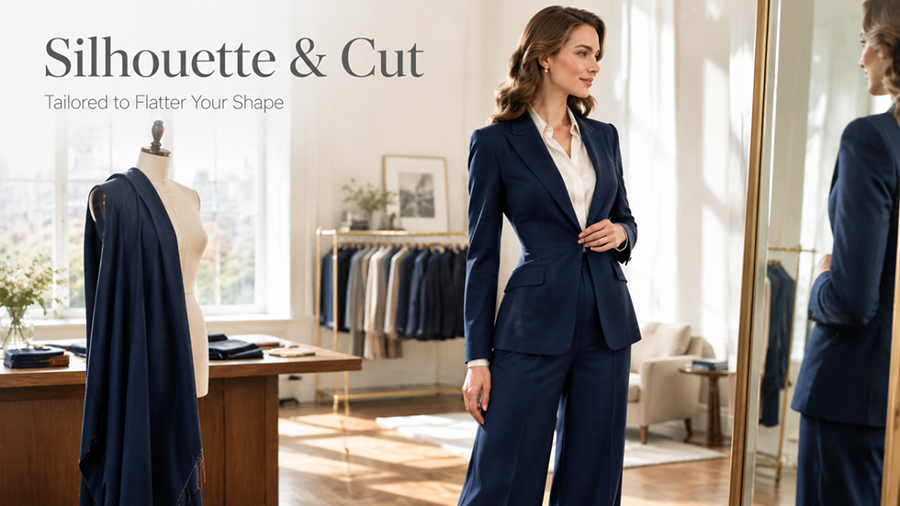
A bespoke jacket should never feel like armor imposed upon your frame. Instead, it functions as a deliberate dialogue between your posture and the cloth. By selecting fabrics with the right balance of structure and fluidity, you can flatter your natural silhouette with subtle precision.
The Pear and Hourglass Frame
If you possess defined hips or a pronounced waist, avoid rigid, cardboard-like textiles that create boxy, unflattering blockiness. Look for high-drape worsted wools and lightweight wool-silk blends with natural mechanical give. Cloth with graceful downward movement draws the eye vertically, skimming the hips and allowing wide-leg trousers to flow like liquid architecture.
The Petite Silhouette
When dressing a smaller frame, heavy tweeds or oversized textures can easily overwhelm your proportions. Opt for compact, fine-twill wools or lightweight tropical weaves that can be cut razor-close without adding visual bulk. Pair clean, matte finishes with monochromatic tones to extend your visual line seamlessly.
The Tall or Athletic Silhouette
Longer limbs and broader shoulders provide the ideal canvas for tactile interest and structured tailoring. Heavier seasonal flannels, subtle windowpane checks, and textured sharkskin add depth and presence, grounding your frame without looking austere. If you wish to soften athletic shoulders, choose a softer hopsack or cash-wool blend that relaxes gently over the clavicle.
The Occasion Matrix: Boardroom Authority to Evening Elegance
Your calendar rarely stays within a single lane, and neither should your bespoke wardrobe. Tailoring fabrics speak an unspoken social dialect; selecting the right cloth ensures you never appear underdressed or unintentionally theatrical.
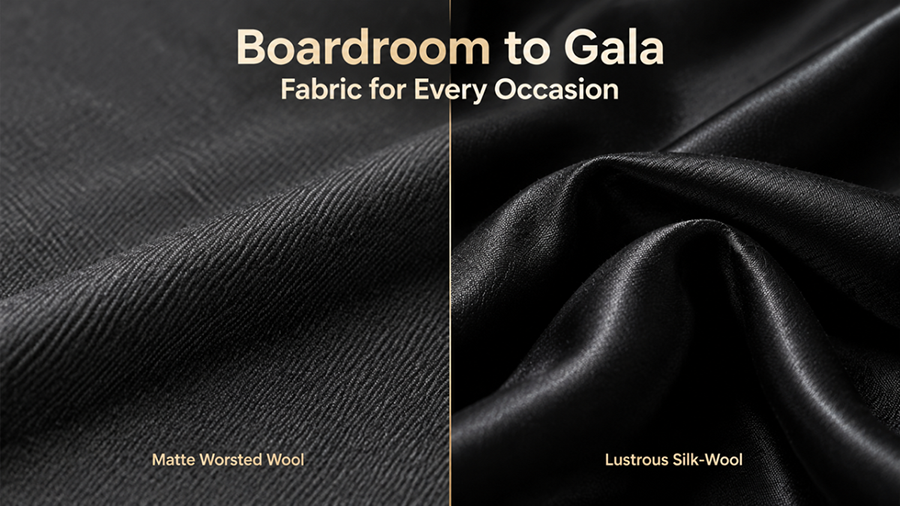
1. Daily Corporate Power: Matte Worsted Wool
For high-stakes negotiations and daily corporate leadership, clarity and restraint are paramount. A 250g worsted wool in charcoal, slate, or deep ink navy remains the ultimate cornerstone. Its matte surface conveys quiet authority, while the tight twill weave resists desk creases throughout twelve-hour workdays.
2. The Frequent Traveler: High-Twist Fresco and Crepe
When your schedule spans time zones, look toward high-twist wools (often called travel wools or fresco). The yarns are spun with extra tension before weaving, creating an open-pore fabric with exceptional spring-back memory. Even after hours in a tight cabin seat, a brief hang in a steamy hotel bathroom will restore its crisp lapel roll without an iron.
3. Black Tie and Gala Affairs: Silk-Wool Blends and Velvet
When daylight fades into cocktail hours or ceremonial awards, trade matte textures for fabrics that capture evening light. A silk-wool blend introduces a subtle, liquid sheen that elevates smoking jackets and tuxedos into red-carpet statements. For colder months, plush cotton velvet in emerald or rich burgundy offers regal depth that photographs magnificently.
4. Summer Soirées and Creative Events: Linen and Silk Blends
Pure linen is storied for its breezy character, yet its tendency to crumple can feel too informal for tailored gatherings. The modern solution lies in an intimate blend—linen-wool-silk. The wool anchors the structure and reduces aggressive creasing, the linen brings crisp ventilation, and the silk introduces refined softness.
The Made-to-Measure Advantage and Longevity
The true distinction of bespoke tailoring lies in fabric authenticity. Unlike mass-manufactured suits that rely heavily on synthetic polyester blends—which trap heat, pill easily, and generate an unflattering artificial shine over time—a custom suit honors noble natural fibers.
Natural wool fibers are inherently breathable, naturally temperature-regulating, and possess a coiled cellular structure that acts like a microscopic spring. To ensure your tailored investment endures for decades, observe three essential golden rules:
- Allow the Cloth to Rest: Never wear the same tailored suit two consecutive days. Giving wool 48 hours on a contoured hanger allows the fibers to naturally recover their resting tension.
- Steam Over Dry Cleaning: Chemical dry-cleaning solvents strip wool of its natural lanolin oils. Instead, refresh your jacket with gentle vertical steam and spot-clean when necessary.
- Invest in Solid Wood Contours: Support the shoulder pads and canvassing using wide, shaped wooden hangers to preserve the jacket’s three-dimensional silhouette.
Finding Your Second Skin
Ultimately, commissioning a suit is much more than taking measurements; it is an intimate exercise in self-expression. The weight of the lapel, the whispering drape of the trousers, and the understated luster of fine cloth form a second skin that transforms how you carry yourself into any room.
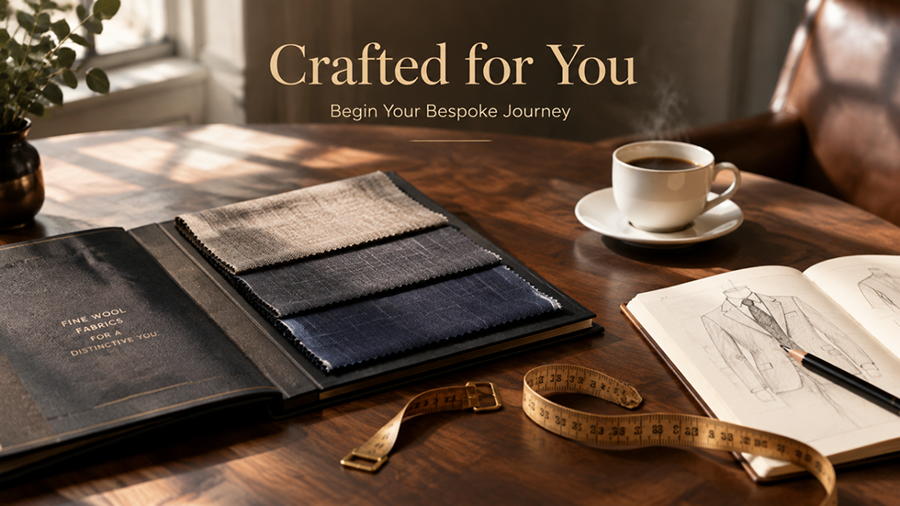
Whether you are crafting your very first executive uniform or designing a bespoke ensemble for an unforgettable evening, the perfect journey begins with touching the cloth.
Ready to discover the cloth that reflects your standard of elegance? Schedule a private fabric consultation with our master tailors to explore our handpicked seasonal swatches and bring your bespoke vision to life.